The first symptom

Some mornings, an idea arrives with completely disproportionate intensity.
For example: changing your life through 10,000 steps. The idea shows up very early. Before coffee. It seems serious, structured, almost scientific.
Move. Do yoga. Breathe consciously. Become a person who genuinely believes a mat on the floor could improve their existence. Then the real morning arrives. And every morning, laziness presents an extremely convincing case. It says: “Tomorrow will be much better suited to self-improvement.” I listen to it often. And yet one morning, I decided to dance. Urgently. I launched an 70s playlist with the energy of a woman fleeing an invisible catastrophe. Sister Sledge. ELO. Donna Summer. People extremely committed to joy. For forty-five minutes, I moved through the living room like a divorced aunt rediscovering happiness in an American indie film. I loved it. The body gets on board with this kind of project very quickly.

Why is dancing associated with the night? Mornings could use it just as much. Mornings are desperately short on choreography. They’ve been given: alarms, emails, vitamins, people running with great seriousness. When all they ever needed was a little disco. I did it again the next day. Then again. And without understanding how, the thing started to spread. I mentioned it to people around me. At first they laughed. Then they tried. “Just one song,” they said. Which is obviously false. No one survives Donna Summer in moderation.
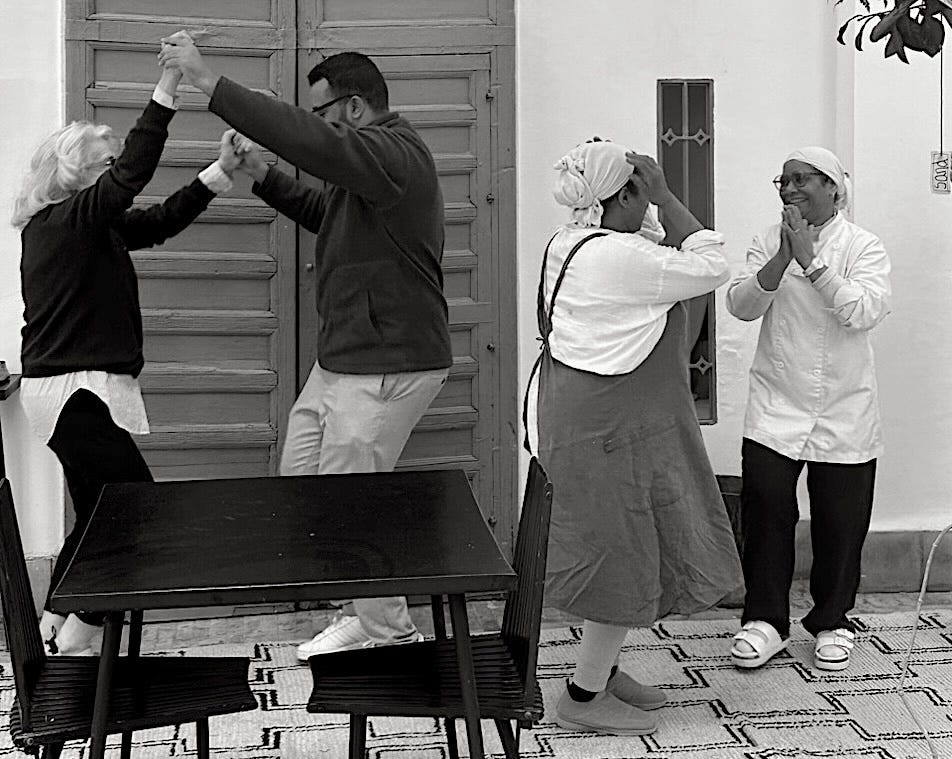
In the riad, mornings became slightly more animated. Someone crosses the patio with their coffee. Someone else puts on music. One person starts dancing only with their shoulders, which is usually the first symptom. Then everyone follows. Very quickly, it becomes impossible to stay completely still. Even the tired ones dance a little. Especially the tired ones.
It happened at the office too. Not officially. No company has yet dared to write: “8:45 am: collective disco.”
Sometimes, before starting the workday, I put on music. At first people resist a little. They try to remain dignified, barely moving. Then there’s always a very precise moment when someone starts laughing. And everything shifts very quickly. Bodies understand before brains do. Suddenly adults who, three minutes earlier, were comparing fabrics, looking for sketches, or trying to locate missing scissors are dancing in the middle of threads, lukewarm mint tea and stacks of samples with an almost alarming enthusiasm.
In Marrakech, during the holidays, we started inviting passersby to dance a few steps before entering the store.
There was a small gift for those who accepted. Which turns out to be a surprisingly effective negotiating strategy. At first, people hesitated enormously. They looked around as if we were asking them to reveal a deeply embarrassing personal secret. Then someone took a step. Another person laughed. And in less than thirty seconds, strangers were swaying in the middle of the medina with completely disproportionate joy. There were the immediately confident dancers. The very stiff people who became suddenly flexible after four seconds. The couples who discovered they had absolutely no sense of rhythm in common. The tourists who were far too enthusiastic. The children who were obviously better than everyone else. And above all there was that moment when faces changed. As if a few seconds of dancing suddenly brought people back to the right side of themselves.
I have always been deeply suspicious of people who claim that adults are naturally serious. I think mostly they just lack music at the right moment.
Since then, I dance almost every morning. I’ve started to think that part of humanity is simply exhausted from no longer moving joyfully together. I’ve seen people arrive tense, tired, and leave three songs later with their faces completely transformed. So now, when someone talks to me about the ideal morning routine, I think of Donna Summer.