

Achada
The Echo of a Print

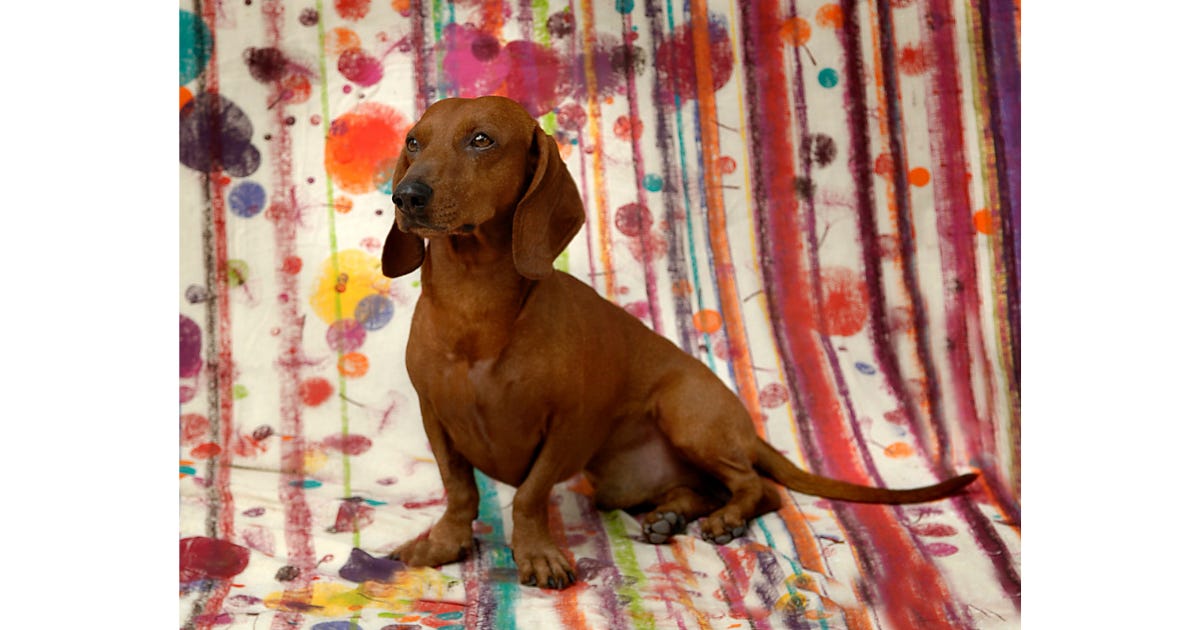
In the block printing workshops of India, there is a fabric nobody looks at, but that sees everything: the achada. Cotton stretched beneath the cloth to be printed. It absorbs the excess pigment, catches what spills, steadies what might run. And yet, the first time I saw one, it stopped me cold.
Over time, the achada changes. It layers gesture upon gesture, coat upon coat, hesitation upon hesitation. No plan. But it keeps a record of everything. A kind of textile diary, made of patience and accident. The printed cloth is the facade. The achada holds the backstage.
One day, I asked. What happens to these fabrics? The answer: nothing. They get thrown away. So I started collecting them. For years, they arrived. All different. I turned them into bags, pouches, flowers, rugs. They became backdrops for photoshoots, one-off pieces in my collections. Sometimes sold as found - raw, unrepeatable.
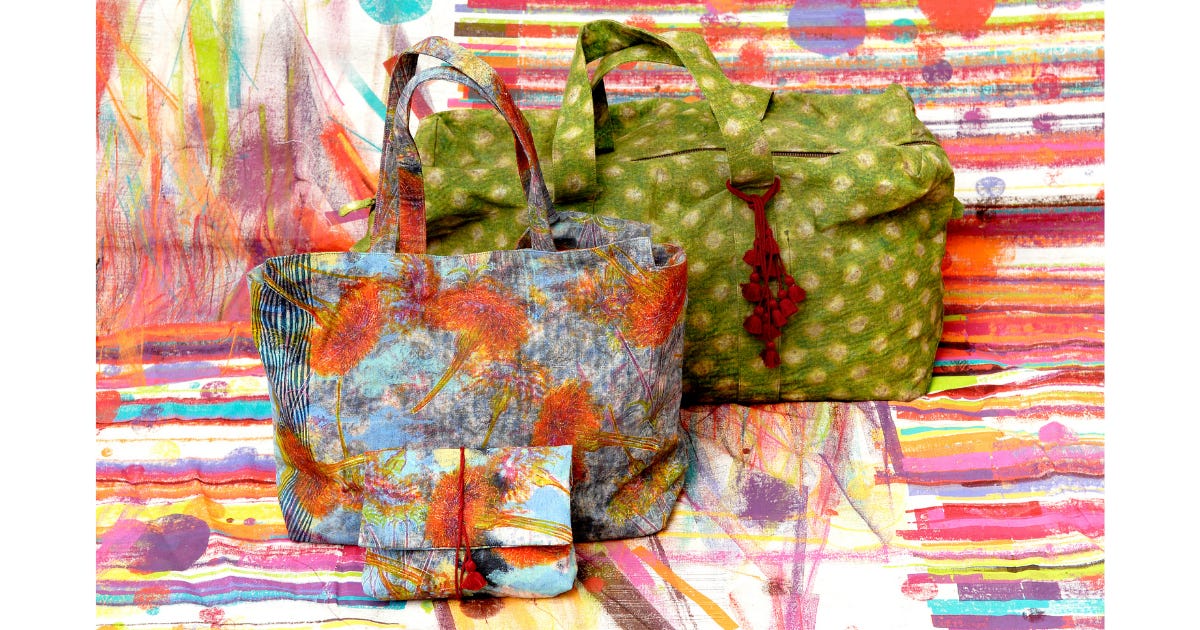
These achadas, made to disappear, carry what is never shown: the overruns, the attempts, the corrections. Raw, but loaded. They tell the story of a print better than the print itself.
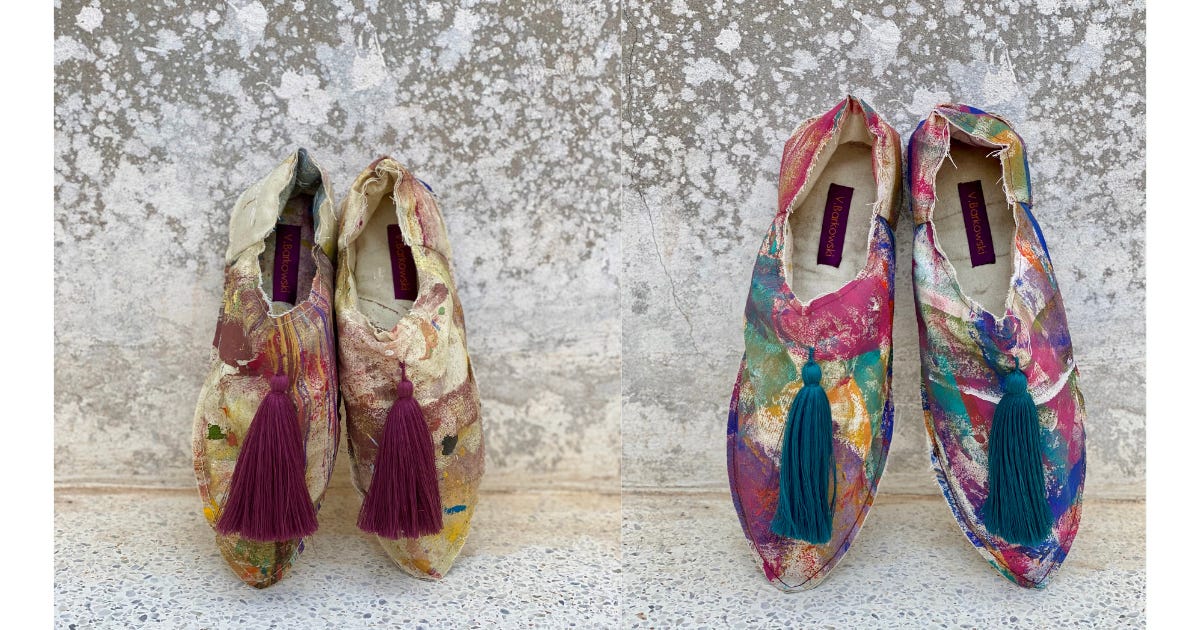
Years later, in Isabelle de Borchgrave’s studio, I found the same logic. She kept her work cloths. When she painted her paper dresses, she always slipped a piece of cotton underneath, to absorb. Same gesture. Same eloquent blotter. She gave me a few. I made babouches from them. Each one different.
Isabelle is gone now. We rarely crossed paths. But I knew she was there, somewhere. That was enough. I felt between us something rare: the closeness of two worlds that rhymed.
What the achada taught me is that what gets forgotten often matters most. That the cloths made to disappear can become the most precious. Sometimes you just need to turn the table over.